
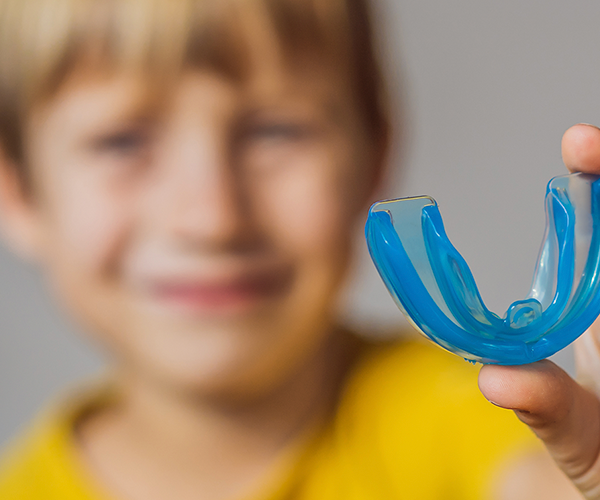
Your child came home from a checkup, and someone mentioned Myobrace. Now you are wondering if it replaces braces, or if it is just one more thing to pay for. Here is a straight answer, from one set of parents to another.
Key Takeaways for Parents
- Myobrace is a set of soft, removable appliances worn about 1 to 2 hours a day plus overnight, designed for children roughly ages 3 to 15.
- Braces are fixed brackets and wires that move teeth by steady force, usually started between ages 10 and 14 once most permanent teeth are in.
- Myobrace treats the habits behind crooked teeth. Braces move the teeth that are already crooked. They solve different parts of the problem.
- The American Association of Orthodontists recommends a first orthodontic check by age 7, which is when early options are easiest to weigh.
- Book an evaluation at Kids City Dental & Braces in Brighton before deciding. The right choice depends on your child’s age, bite, and habits.
Dr. Tory McFarlin leads orthodontic care at Kids City Dental & Braces in Brighton, CO. He completed a two-year orthodontic training program through the Academy of GP Orthodontics, plus a year of interceptive orthodontics, which is early treatment while a child is still growing. As parents of two kids themselves, he and Dr. Thu McFarlin get why this decision feels heavy.
What Is Myobrace, in Plain Terms?
Myobrace is a preventive orthodontic system for growing children, built around soft, removable mouthpieces worn about 1 to 2 hours during the day and overnight while sleeping. It targets the causes of crooked teeth, such as mouth breathing and low tongue posture. The maker, Myofunctional Research Co., designs it for kids aged 3 to 15. It aims to reduce or avoid the need for braces later.
The appliances look like a soft, chunky mouthguard. A child pops one in, keeps the lips sealed, and breathes through the nose. Over months, that trains the muscles of the mouth and face to work the way they should.
Myobrace also comes with daily activities. These are short breathing and tongue exercises done at home. The appliance and the exercises work together, so skipping one weakens the other.
Here is the part that trips parents up. Myobrace is not trying to shove teeth into line the way a wire does. It is trying to fix why the teeth drifted in the first place, so the mouth grows with enough room. That is a slower, quieter kind of work, and it only pays off during a child’s growing years.
How Does Myobrace Actually Work?
Myobrace works by fixing the oral habits that push teeth out of line, then guiding jaw growth so adult teeth have room to come in straight. Myofunctional Research Co. describes four stages: habit correction, arch development, dental alignment, and retention. It does not glue anything to the teeth. It changes how the tongue, lips, and breathing behave during growth.
Stage one is habit correction. The child learns to breathe through the nose, rest the tongue against the roof of the mouth, swallow correctly, and keep the lips together at rest.
Stage two is arch development. If the upper jaw is narrow, the appliance helps widen it so teeth and tongue have space.
Stage three is dental alignment, once the last permanent teeth arrive. Stage four is retention, holding the result. In some cases a short round of braces still finishes the job, and that is a normal outcome, not a failure.
How Do Traditional Braces Work?
Traditional braces move teeth using steady mechanical force. An orthodontist bonds small brackets to each tooth and links them with a wire. Every few weeks, the wire gets adjusted, and the teeth shift a little more toward their target spots. Braces correct crowding, gaps, and bite problems that are already present.
Braces do one job very well. They move teeth that are already crooked into better positions, even in severe cases.
They do not change why the teeth grew crooked. If mouth breathing or a tongue habit caused the crowding, braces straighten the teeth without touching that habit. That is why a retainer matters so much afterward.
Most kids start braces between ages 10 and 14, once most or all permanent teeth have come in. By then an orthodontist can see the full picture of how the bite lines up.
Braces also work on a fixed schedule the child cannot skip. The brackets stay on, so progress does not depend on a kid remembering to wear anything. For some families that is a relief. For a child who plays contact sports or struggles with brushing, the trade-offs land differently, and that is worth raising at the exam.
Myobrace Versus Braces, Side by Side
Here is the short version of who each option tends to suit. Myobrace fits younger children with developing habits. Braces fit older kids with teeth already out of line. Neither is a universal answer, and many children do well with a mix over time.
| Feature | Myobrace | Traditional Braces |
|---|---|---|
| Typical age | 3 to 15 | 10 to 14 |
| What it targets | Oral habits and jaw growth | Teeth already misaligned |
| Fixed or removable | Removable | Fixed |
| Daily effort | 1 to 2 hrs plus overnight, plus exercises | Worn full time, no removal |
| Success depends on | Child wearing it and doing activities | Regular adjustment visits |
| Food limits | None, it comes out to eat | No sticky or hard foods |
The table names the trade-off clearly. Myobrace shifts the daily work onto the child and family at home. Braces put the work on the appliance and the visit schedule.
One more difference matters for a child’s comfort. Braces can feel sore for a day or two after each adjustment, and cleaning around brackets takes real effort. Myobrace comes out to eat and brush, so decay risk around the appliance drops. The catch is compliance. A removable appliance only works when a child wears it, and a busy family has to build that habit into the day.
What Does Each Option Cost, and Does Insurance Help?
Costs vary by case, so treat any figure as a starting point, not a quote. Published ranges put braces around $3,000 to $7,500 over 18 to 36 months. Myobrace often runs less, especially when started early, and treatment commonly spans 12 to 24 months. Only an exam can price your child’s specific situation.
Dental insurance treats orthodontics differently from plan to plan. Some cover a share of braces, some cover little of preventive appliances. Check your orthodontic benefit before you assume either way.
Kids City Dental & Braces offers in-house payment plans and orthodontic financing. That can spread either option across months instead of one large bill.
Cost of waiting is worth a thought too. The American Association of Orthodontists notes that catching jaw and bite problems early can head off more invasive work later, such as extractions. Early treatment does not guarantee lower cost in every case. It does give a family more options while the jaw is still growing, and fewer options tend to mean higher bills down the road.
Which One Is Right for Your Child?
The honest answer is that it depends on age, habits, and how ready your child is to cooperate at home. A five-year-old who mouth breathes is a different case from a twelve-year-old with crowded permanent teeth. One size does not fit both, and a good exam sorts that out fast.
Myobrace tends to make sense when a child is young, still growing, shows habits like mouth breathing or thumb sucking, and will actually wear the appliance. The whole system leans on daily use.
Braces tend to make sense when permanent teeth are in and already crowded or tipped, or when a family wants steady, hands-off correction without depending on a child’s daily routine.
There is also a middle path. Early Myobrace can reduce how much braces work is needed later. The American Association of Orthodontists recommends a first orthodontic evaluation by age 7, precisely because that early look shows which path fits before problems harden.
Common Questions Parents Ask
Can Myobrace Replace Braces Completely?
Sometimes, but not always. Myobrace can reduce or remove the need for braces when a child starts young and wears it well. Myofunctional Research Co. positions it as a way to address causes before all permanent teeth arrive. For a child who already has crowded permanent teeth, braces may still be needed to finish alignment.
Does Myobrace Hurt?
Not the way a tightened wire can. The appliance is soft and removable, so there is no soreness from adjustments. Some children feel mild pressure or find it strange at first. Most adjust within a week or two of regular wear, especially with the overnight routine.
At What Age Should My Child Be Evaluated?
The American Association of Orthodontists recommends a first orthodontic evaluation by age 7. By then enough permanent teeth are in for an orthodontist to spot crowding, crossbites, or jaw issues early. That visit often leads to monitoring, not immediate treatment.
Getting Your Child Evaluated in Brighton
The clearest next step is an in-person evaluation, since neither option can be chosen well from a blog alone. At Kids City Dental & Braces in Brighton, Dr. Tory McFarlin examines how your child’s teeth, jaw, and habits are developing, then lays out the real choices for your family. Both doctors treat children only, so this is the work they do all day.
Kids City Dental & Braces sees families across Brighton, Commerce City, Thornton, and Henderson. The office keeps Wednesday hours until 7 PM, which helps if you cannot leave work midday.
You do not have to decide anything at that first visit. Many Brighton families come in, hear the options, and leave with a plan to watch and wait. The point is getting eyes on your child’s growth early, while the easy fixes are still on the table.
To book an evaluation, call Kids City Dental & Braces at (720) 797-9779. Dr. Tory McFarlin and Dr. Thu McFarlin can tell you whether Myobrace, braces, or a wait-and-watch plan makes the most sense for your child right now.